


The Work
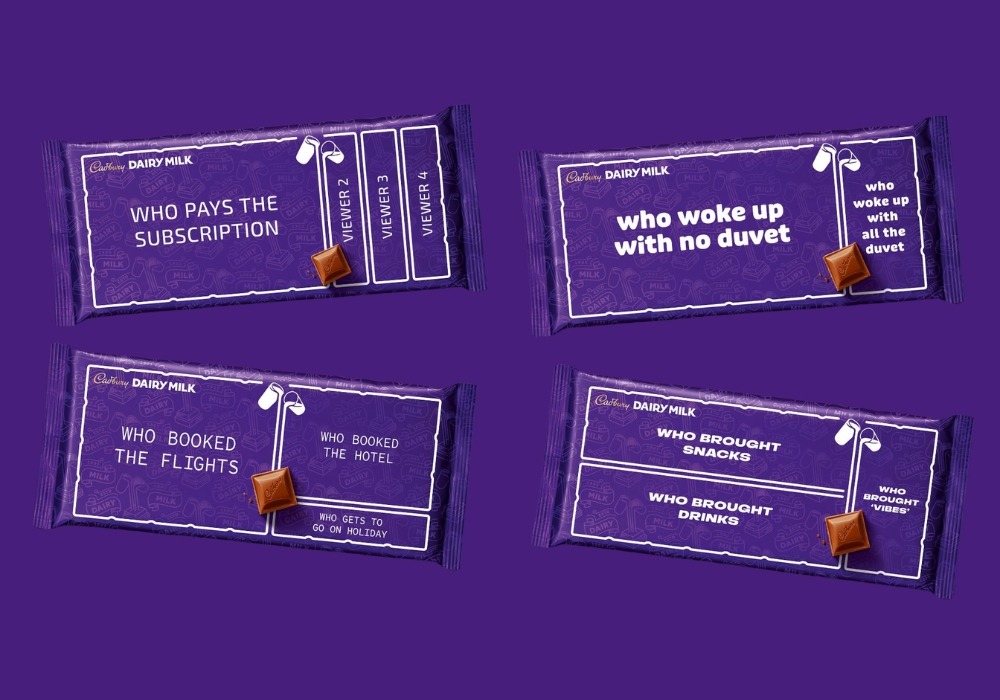
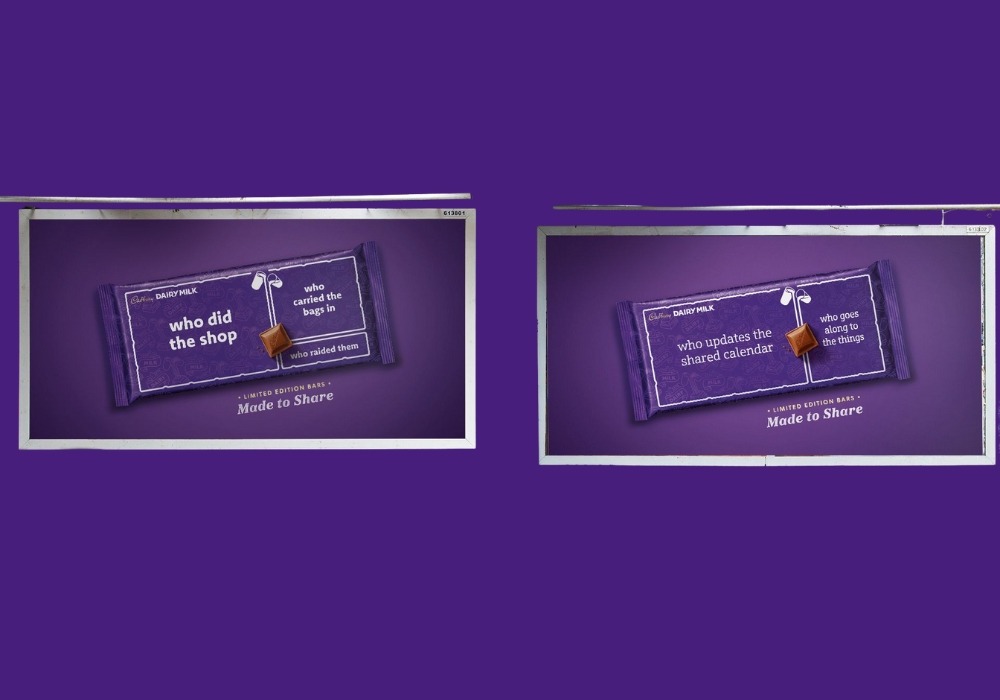
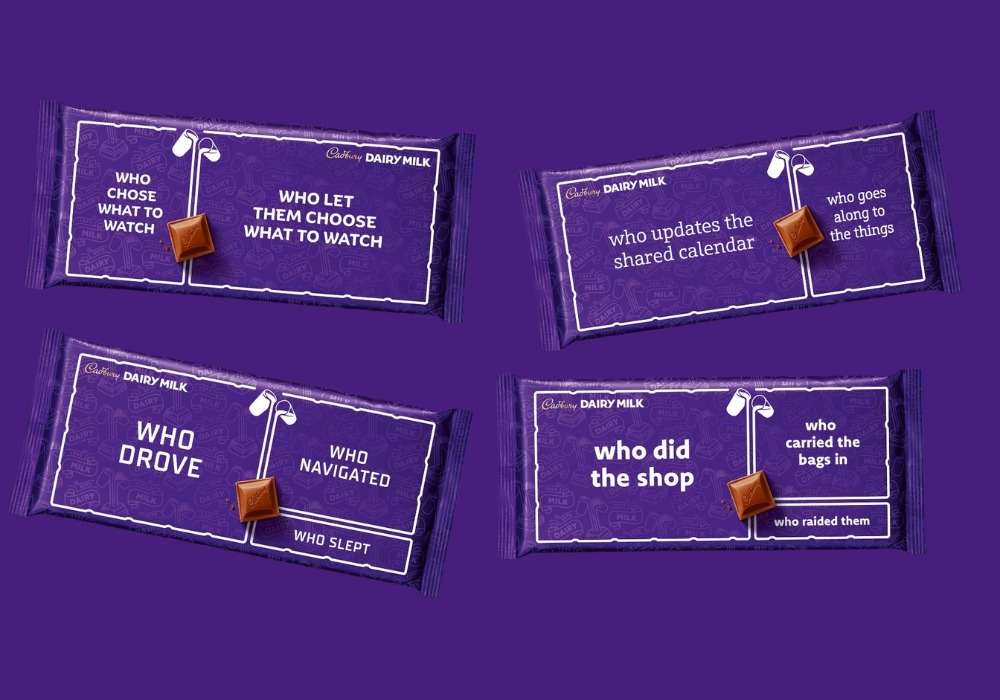
This campaign is not built around one line or one visual. It is built around a set of short questions that work together as a system. “Who drove?”, “Who parked?”, “Who ate?”, “Who left?” Each phrase appears next to a Cadbury Dairy Milk bar that has already been broken or partly eaten. The chocolate is never untouched. Whatever happened, has already happened.
What makes the work distinctive is how the questions connect to the size of the chocolate pieces. Smaller blocks appear next to questions like “Who ate?” or “Who left?”, while larger blocks are paired with “Who drove?” or “Who parked?”. This is intentional. It reflects how people behave in real group situations. The person who takes responsibility often gets more. The person who sneaks a bite usually doesn’t.
Cadbury doesn’t comment on whether this is fair or unfair. It simply shows it. The brand doesn’t position itself as the hero of the moment. Instead, it shows up as the familiar thing that sits in the middle of everyday interactions, quietly observing how people share, negotiate and make small decisions together.
The Why
What kind of marketing is this?
It is behavioural insight disguised as simplicity.
Why does it work?
It encodes meaning into form.
The size of the chocolate carries the message. The copy simply directs attention to it, allowing people to understand the situation visually rather than being told what to think.
It reflects real social contracts.
We instinctively understand why the driver gets more chocolate, or why the person who ate early probably didn’t ask. These are everyday, unspoken rules, and Cadbury brings them to life without judgement.
It turns the product into a narrator.
The chocolate is not being advertised. It is showing what just happened between people, turning the product into evidence rather than the subject.
It invites recognition, not reaction.
People don’t engage because the work is loud or clever. They engage because it feels familiar and true.
It reinforces Cadbury’s emotional territory.
Sharing, fairness, togetherness and small human negotiations have always been part of the brand. This campaign updates those ideas without romanticising them.
Cadbury doesn’t explain sharing.
It shows how messy, imperfect and human it really is.
The Way
Mechanic 1: Use scale as language.
Visual proportion communicates value and responsibility faster than words ever could.
Mechanic 2: Anchor ideas in lived behaviour.
When people recognise themselves in the work, persuasion becomes unnecessary.
Mechanic 3: Let copy point, not perform.
Short questions act as prompts, not slogans, guiding interpretation without dominating it.
Mechanic 4: Design for interpretation.
Meaning lands more powerfully when the audience connects the dots themselves.
Mechanic 5: Stay observational, not judgemental.
By noticing behaviour rather than correcting it, the brand builds warmth, trust and relatability.

Measurement
Attention
High dwell time driven by visual puzzles rooted in familiar social situations.
Behaviour
Organic sharing and conversation as people joked, debated and identified themselves within the scenarios.
Commercial
Stronger mental availability and emotional association with shared moments, rather than reliance on functional claims or promotions.
What to Do Next
- Look at where your product already plays a role in everyday behaviour
- Encode meaning into design, not just messaging
- Use questions to encourage reflection, not instruction
- Trust audiences to understand nuance
- Build ideas that feel observed, not constructed
In short:
This campaign didn’t tell people how to share chocolate. It showed how they already do. Who gets more. Who gets less. Who took responsibility. Who couldn’t resist. Cadbury simply held up a mirror, and let the chocolate speak for itself.