

The Work
This is not a space campaign.
It is a reframing of what space means.
Built for sak.sak, a lifestyle bag brand rooted in everyday utility, the idea starts with a simple tension. Space is back in culture. But for most people, it remains distant. Symbolic. Out of reach.
So the campaign shifts the lens.
Not everyone will go to the moon.
But everyone is on a journey.
Work. Travel. Movement. Routine. Change.
The things we carry move with us through all of it.
The idea, “sak na die sterre”, takes the biggest mission of our time and brings it into everyday life. It reframes exploration as something personal. Something daily. Something you carry with you.
The creative system follows that thinking.
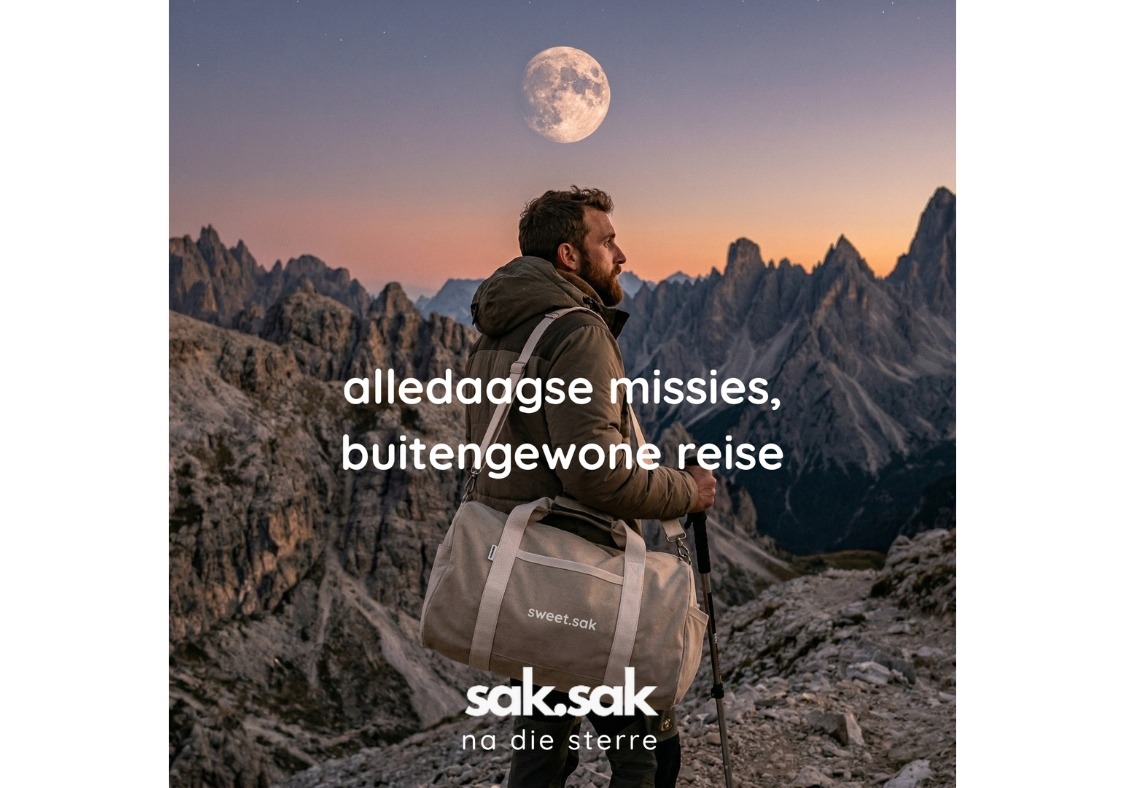
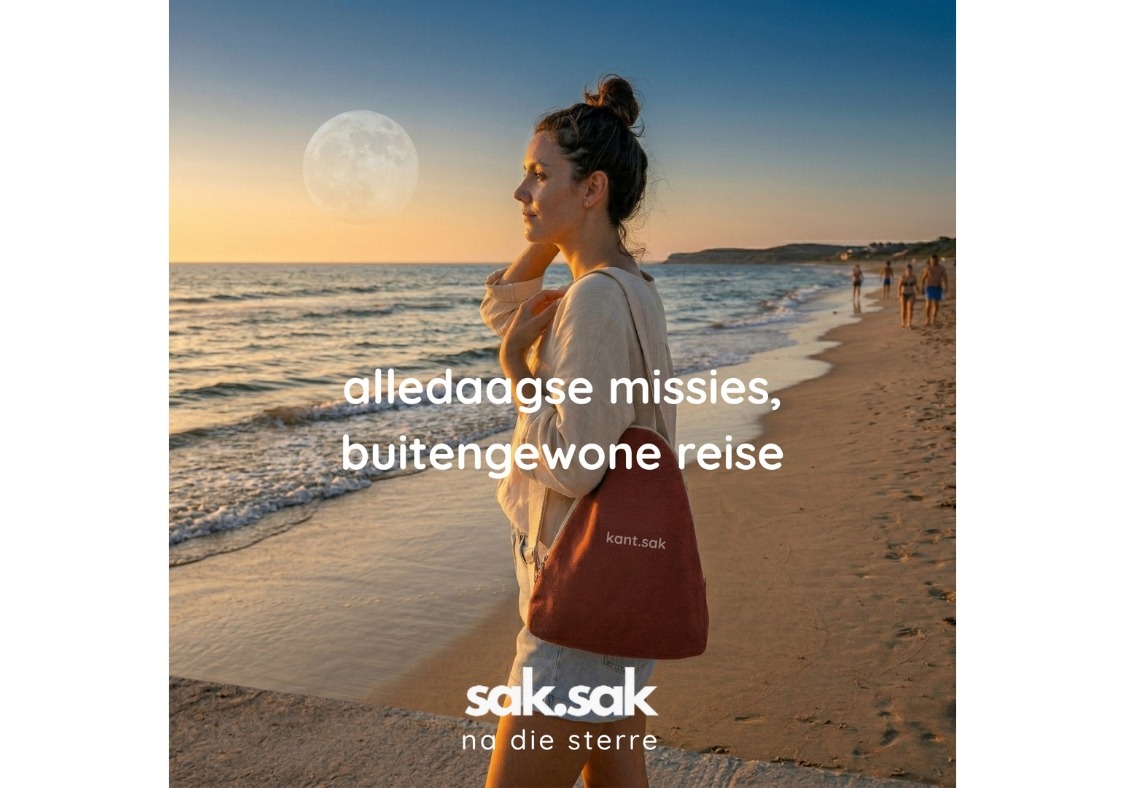
Real environments. Rooftops, coastlines, cities, mountains.
Natural light. Real moments. Nothing staged.
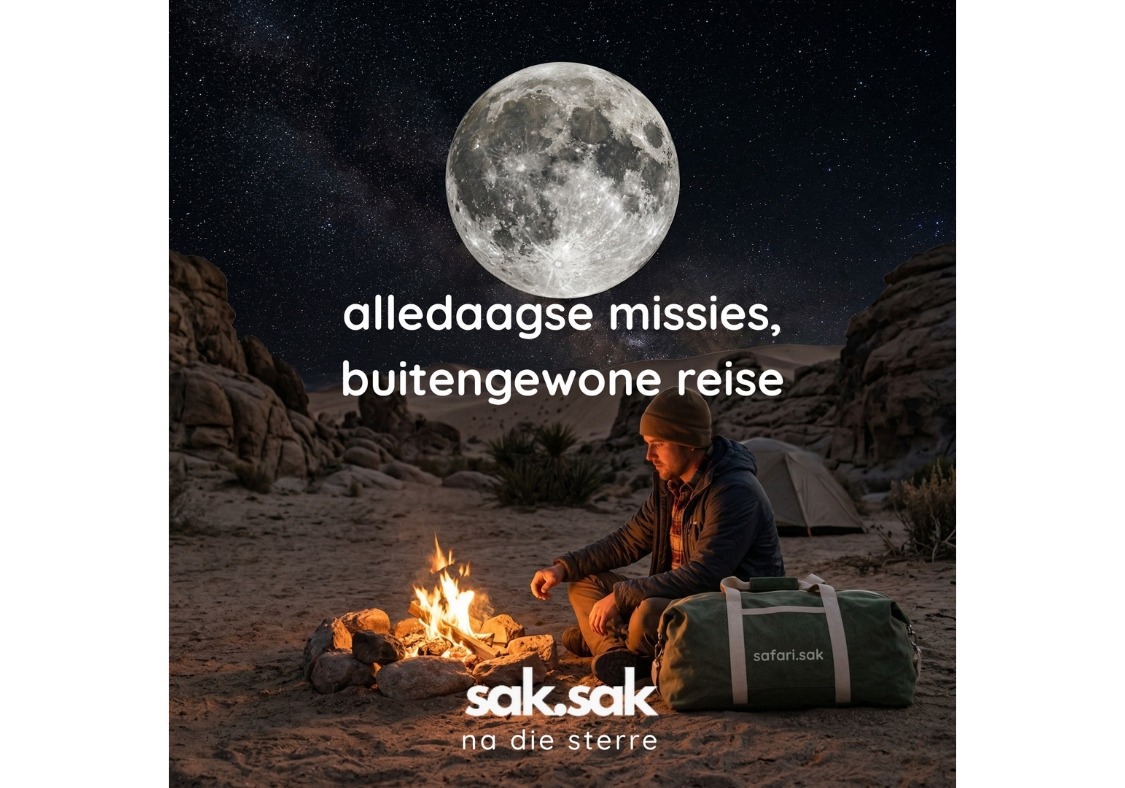
The moon appears subtly. Not as spectacle, but as a quiet reminder of something bigger.
The product does not dominate.
It exists in use.
Because the bag is not the story.
It is part of it.
The Why
What kind of marketing is this?
It is cultural reframing grounded in everyday behaviour.
Why does it work?
It brings a distant idea closer.
Space is aspirational, but inaccessible. By translating it into daily movement, the campaign turns a global narrative into something personal.
It anchors in real life.
This is not fantasy. It is commute, travel, downtime. Moments people recognise instantly. That familiarity builds connection.
It sells meaning, not function.
The bag is no longer just utility. It becomes a companion. A signal of intent. A tool for the journey.
It uses restraint.
No heavy sci-fi cues. No overproduction. Just subtle lunar references layered into real environments. That contrast makes the idea feel intelligent, not forced.
It builds a system, not a moment.
A repeatable structure across visuals and messaging allows the campaign to scale without losing clarity.
This is the shift.
From product-led storytelling to meaning-led positioning.
From “what it does” to “what it represents”.
The Way
Mechanic 1: Start with a cultural truth
Find the tension. Space is everywhere in conversation, but nowhere in people’s daily lives.
Mechanic 2: Translate, don’t imitate
Do not try to recreate space. Bring its meaning into the real world.
Mechanic 3: Anchor in behaviour
Work, travel, routine. If it does not exist in real life, it will not connect.
Mechanic 4: Build a repeatable system
Consistent visual structure. Clear copy line. Scalable across channels.
Mechanic 5: Let the product live in the moment
Show it in use, not as the hero. Relevance beats prominence.
Measurement
Attention
Engagement driven by relatability and visual contrast. Familiar scenes with unexpected cues.
Brand Meaning
Stronger association with purpose, movement, and personal journeys rather than simple utility.
Long-Term Equity
A clear positioning shift from functional product to meaningful companion. Built to last beyond a single campaign.
What to do next
- Identify a cultural moment your audience recognises but cannot access
- Translate it into something lived, not observed
- Build your idea around real behaviour, not idealised scenarios
- Create a system that scales without losing clarity
- Position your product as part of the journey, not the destination
This campaign does not try to take people to space. It brings space back to them.
In short: Because when a brand connects big ideas to real life, it stops feeling distant. And when it stops feeling distant, people start to see themselves inside it.