

The Work
“Mom, You Were Right” is a campaign built on inherited trust.
Rather than positioning skincare as something discovered through influencers, trends or endless online recommendations, OLAY reframes beauty wisdom as something passed down through generations. The campaign centres on a simple but emotionally loaded truth: eventually, you realise your mom was right.
The campaign launched through a social-first call-to-action led by OLAY ambassador Sarah Michelle Gellar, who reflected on the skincare and self-care lessons she inherited from her own mother. Audiences were then invited to share the advice their mother figures had given them over the years, particularly the advice that only made sense later in life.
What followed became less about product promotion and more about collective recognition.
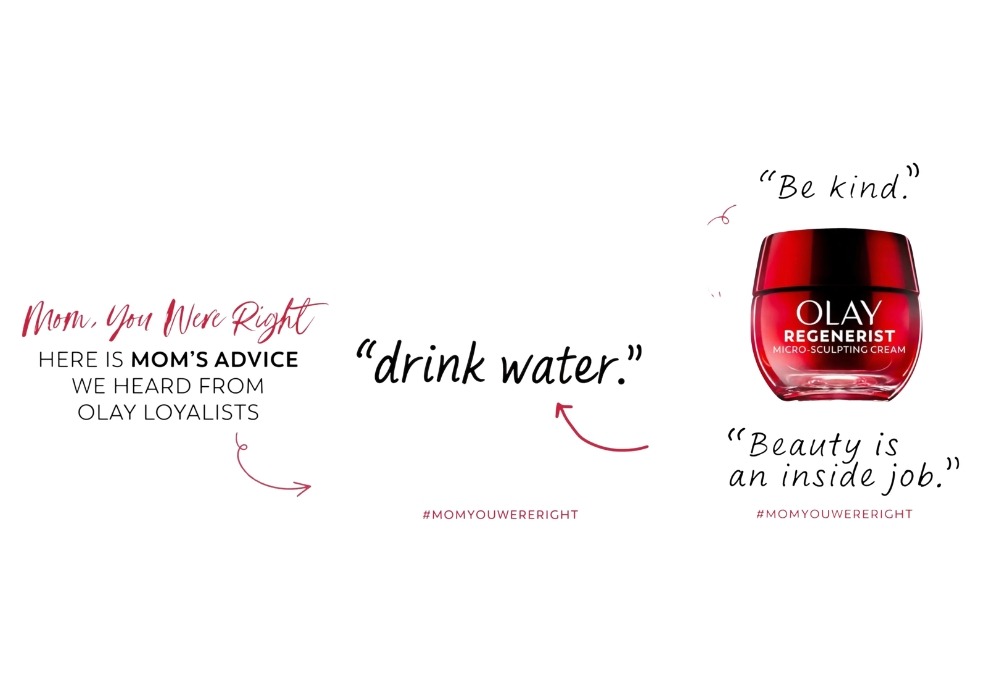
“Drink water.”
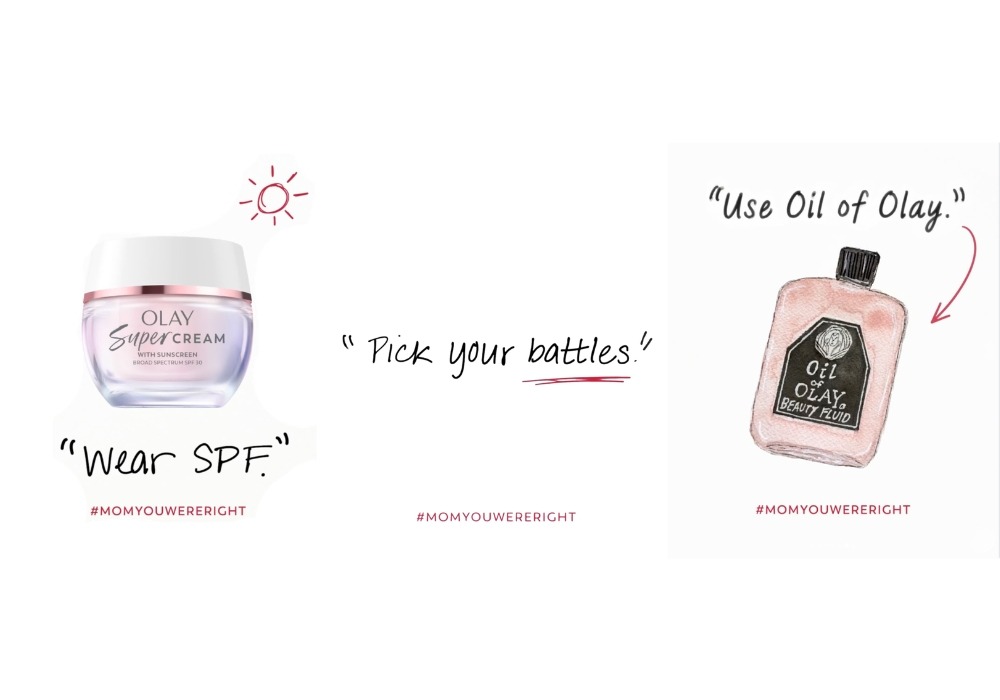
“Wear SPF.”
“Pick your battles.”
“Use Oil of Olay.”
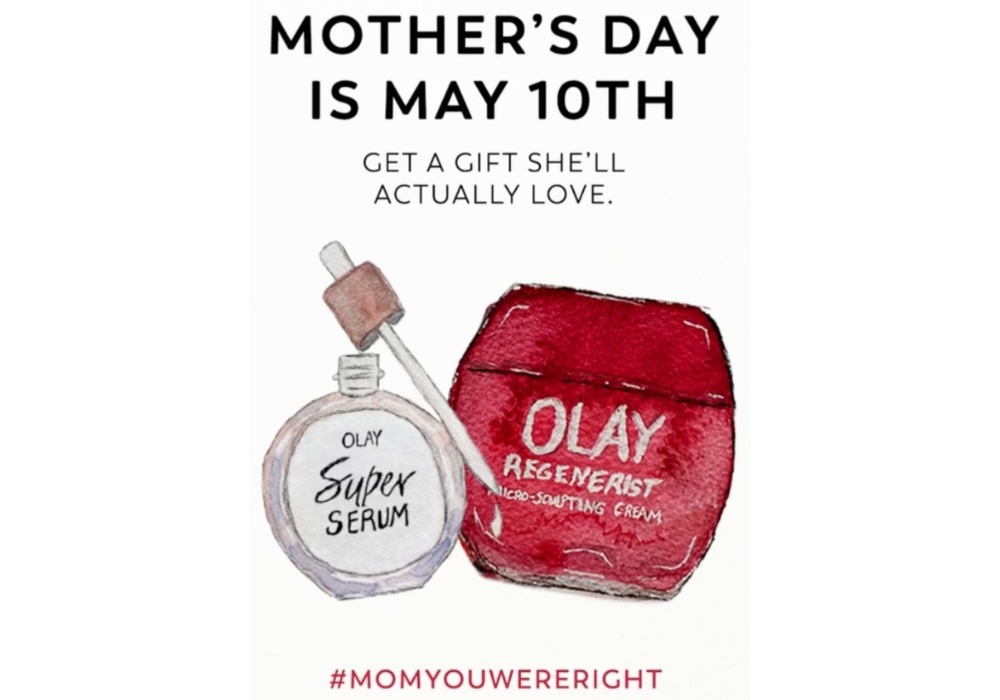
The creative system mirrors the simplicity of those lessons. Minimal layouts. Handwritten typography. White space. Soft sketches and doodled arrows. Product imagery integrated gently into familiar phrases rather than overpowering them.
The visuals feel less like advertising and more like handwritten reminders pulled from memory.
Importantly, OLAY does not frame mothers as nostalgic symbols. It frames them as proof. Women who used OLAY consistently for years became living evidence that simple skincare habits work.
In a category crowded with trends, complexity and endless “must-have” products, OLAY makes a quieter argument:
the women with great skin already knew.
The Why
What kind of marketing is this?
It is generational trust positioning.
Why does it work?
It taps into a universal emotional truth
Almost everyone has experienced the delayed realisation that their parents were right about something. That recognition carries humour, nostalgia and emotional warmth all at once.
The campaign does not need to manufacture relatability because the audience already owns the memory.
It shifts authority away from trends
Modern skincare marketing often relies on:
- influencers
- ingredient overload
- routines
- online expertise
- fast-moving trends
OLAY moves in the opposite direction.
Instead of asking:
“What’s trending?”
It asks:
“Who taught you to take care of yourself in the first place?”
That repositioning gives the brand credibility that feels lived rather than marketed.
It makes skincare emotional, not clinical
The campaign rarely talks about performance metrics or skincare science directly.
Instead, skincare becomes symbolic of:
- care
- consistency
- wisdom
- ritual
- inheritance
The product is not just something you buy. It becomes something passed down.
It turns participation into storytelling
The hashtag works because it invites contribution without pressure.
People can respond with:
- skincare advice
- life lessons
- funny memories
- relationship wisdom
- emotional reflections
That flexibility broadens engagement far beyond beauty audiences.
It embraces simplicity
The creative restraint is intentional.
The handwritten notes, minimal visuals and soft humour create emotional accessibility. The campaign feels native to social platforms rather than designed for polished advertising awards.
And in a feed full of overproduced beauty content, simplicity becomes distinctive.
This is the strategic shift:
from selling products to validating inherited behaviours.
From “discover this” to “you knew this all along”.
And that shift attracts rather than chases.
The Way
Mechanic 1: Build campaigns around recognised truths
The strongest campaigns do not invent emotions. They surface ones people already feel but rarely articulate.
“Mom, You Were Right” works because the audience instantly understands the premise before the brand explains anything.
Mechanic 2: Position the customer as proof
OLAY uses mothers themselves as evidence of product effectiveness.
The message is not:
“Trust our advertising.”
It becomes:
“Look at the women who have used this for decades.”
That creates credibility no trend cycle can replicate.
Mechanic 3: Let participation shape the campaign
The audience is not reacting to the campaign. They are helping build it.
Every shared piece of advice expands the campaign narrative organically.
Mechanic 4: Simplify the visual language
The handwritten aesthetic lowers resistance.
The campaign feels personal, familiar and emotionally human rather than commercially polished.
Mechanic 5: Sell rituals, not routines
Skincare routines are functional.
Rituals are emotional.
OLAY positions skincare as an inherited act of care rather than another beauty task.
That distinction creates deeper attachment.
Measurement
Attention
Strong social engagement driven by shared experiences, comments and user-generated participation rather than influencer spectacle.
Brand Meaning
Deeper association with trust, consistency and generational credibility instead of trend-based skincare positioning.
Long-Term Equity
The campaign strengthens OLAY’s role as a timeless brand that grows through inheritance and familiarity, not constant reinvention.
Rather than competing for short-term relevance, OLAY reinforces long-term emotional loyalty.
What to do next
- Identify the emotional truth your audience already believes
- Position your product inside existing behaviours instead of forcing new ones
- Replace trend-chasing with inherited credibility where possible
- Design campaigns people can contribute to naturally
- Use restraint strategically in visually overcrowded categories
- Build emotional recognition before product explanation
- This isn’t about The Devil Wears Prada 2.
“Mom, You Were Right” succeeds because it understands something many brands overlook: people inherit behaviours before they inherit products.
OLAY does not try to become part of culture through noise. It becomes part of culture through memory.
In short: Because when a brand reflects the lessons people already carry with them, the message stops feeling like marketing and starts feeling personal.