

The work
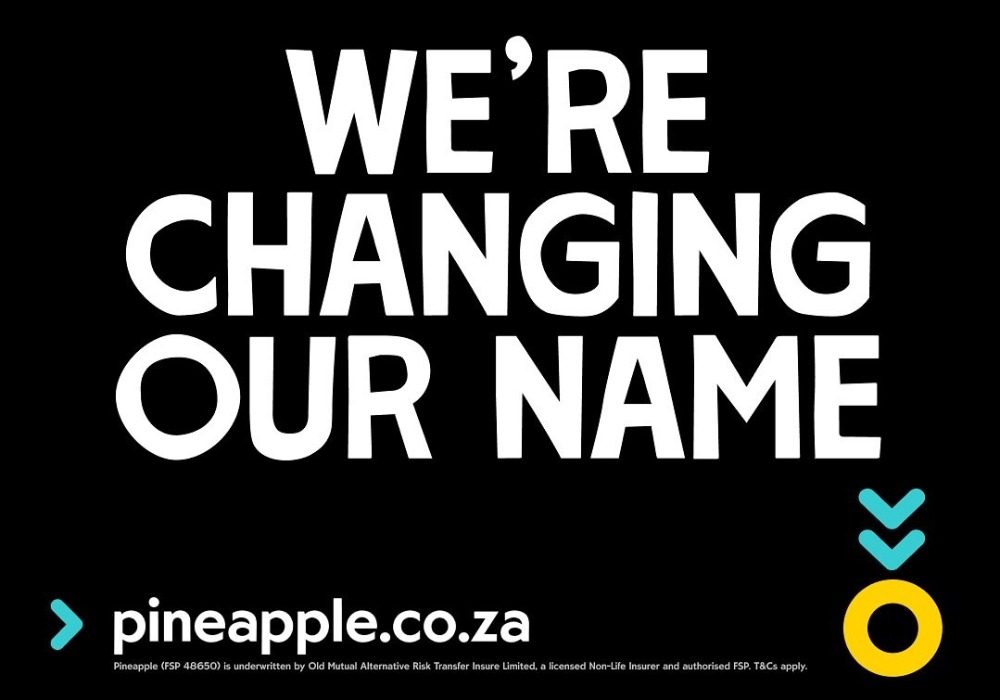
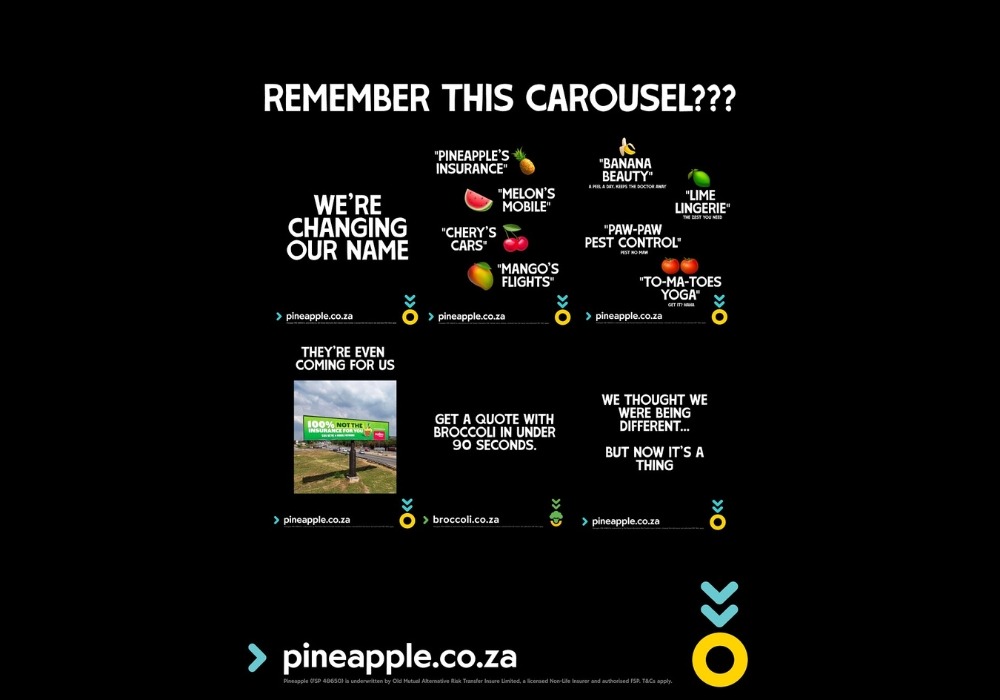
Pineapple Insurance, the South African insurance brand known for its playful tone and irreverent wit, sparked a LinkedIn-wide laugh with a simple question: “Fruit salad anyone?”. The October post poked fun at the growing trend of brands named after fruit - from Melon Mobile to Chery Cars and the now-defunct Mango Airlines - before joking that Pineapple was rebranding to “Broccoli”.
The carousel walked a perfect comedic line. Each slide stacked the gag higher - fake brand names like “Banana Beauty” and “To-Ma-Toes Yoga”, a billboard from Melon Mobile declaring “100% not the insurance for you”, and the punchline: “We’re tired of the other fruits. Fruits are out, veggies are in.” It was sharp, self-aware, and perfectly timed.
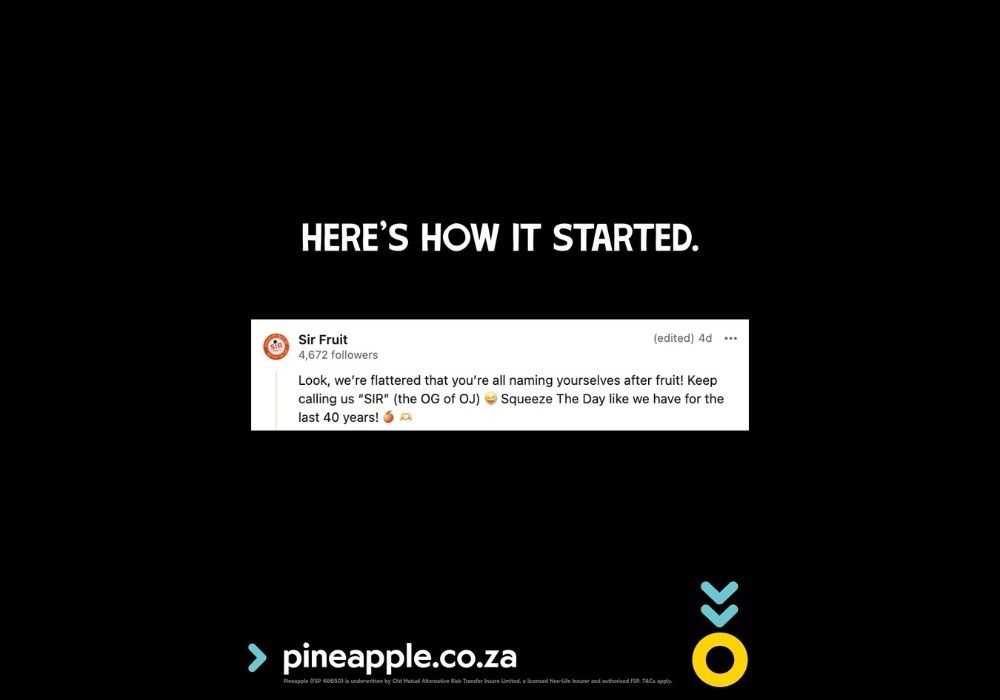
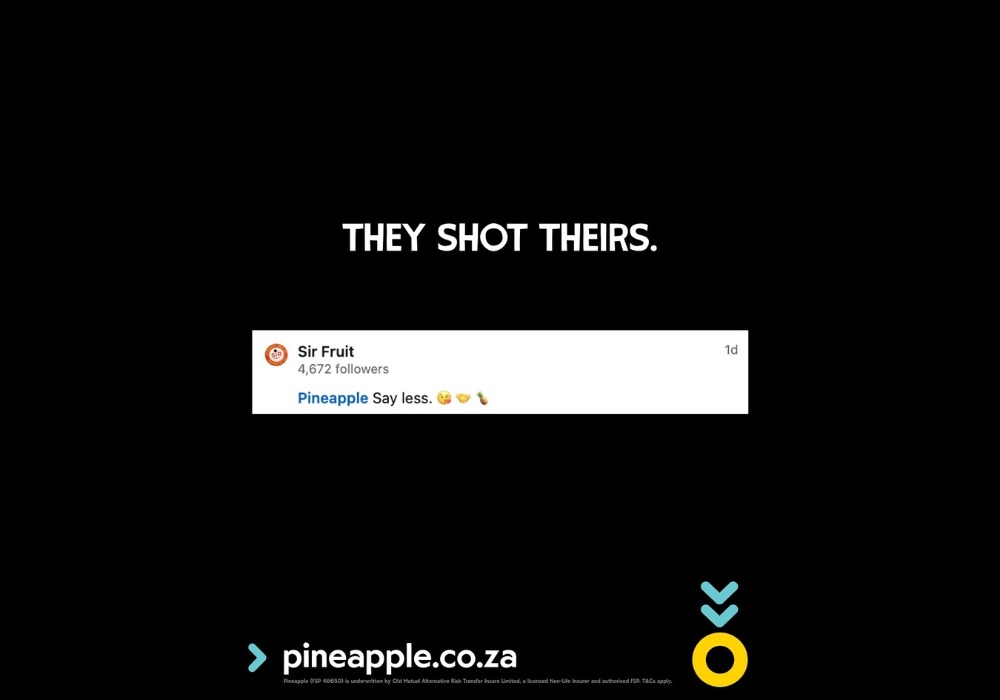
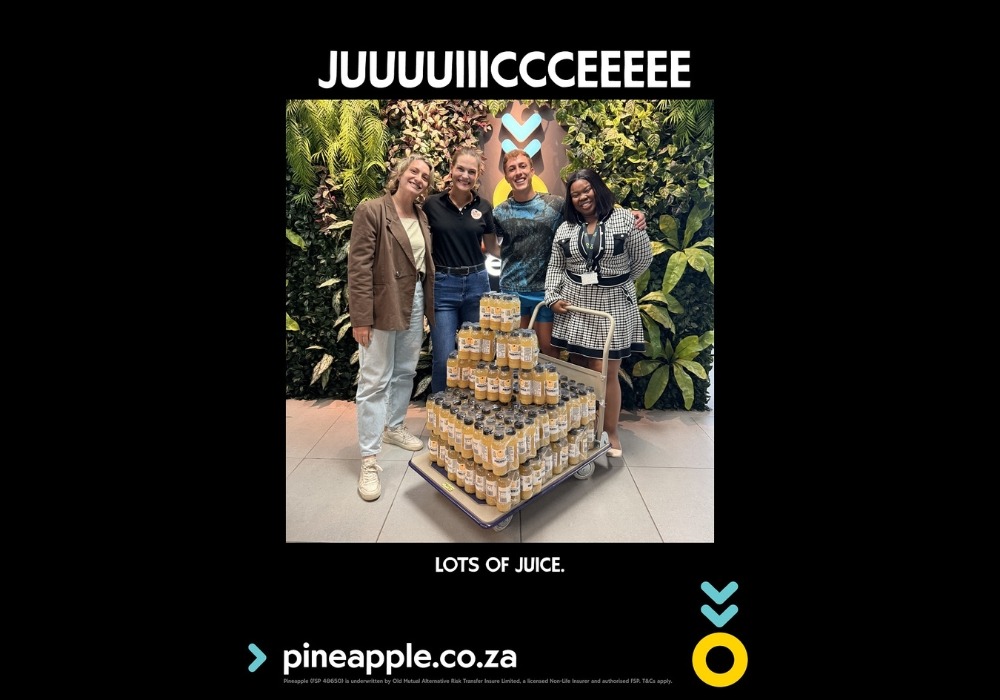
What Pineapple didn’t plan for was what came next. Sir Fruit, the South African juice brand, joined the fun with a post calling themselves the “OG of OJ” and teasing the fruity newcomers to “Squeeze the Day”. Pineapple responded in kind, asking for 250 fresh juices to be delivered to their office - and Sir Fruit delivered. Literally. A day later, Pineapple posted a photo of their team with a trolley stacked high with Sir Fruit bottles and the caption: “JUUUIIICCEEEE. Lots of juice.”
What began as a parody post snowballed into a brand-to-brand moment that blurred the line between online banter and real-world activation.
The why
What type of marketing is this?
It’s social-first brand theatre - playful public storytelling designed for engagement, not hard sell. It’s a perfect example of reactive content meeting community-driven amplification.
Why does it work?
Self-awareness is a superpower. Pineapple didn’t just joke about its category - it joked about itself. That honesty feels fresh in a space where most brands take themselves too seriously.
It turned spectators into participants. Other brands jumped in - Lemoen Marketing, Big Mango Management, and even individuals tagging Apple. It wasn’t a campaign about engagement; it became one.
Offline payoff completes the story. The delivery of actual juice bottles turned a social post into a tangible, photographable punchline - the moment where content crossed into culture.
Humour with precision. Every line - from “Everybody hates broccoli” to “We shot our shot” - stayed on-brand: dry, clever, and human.
Thy way
Mechanic 1: Start with a truth the audience already sees
The naming trend was obvious, but Pineapple said it first - turning a collective eye-roll into a cultural wink.
Mechanic 2: Build for conversation, not control
Instead of defending its brand, Pineapple opened the floor. By tagging real companies and encouraging comments, it invited the chaos - and that’s why it spread.
Mechanic 3: Reward participation publicly.
When Sir Fruit responded, Pineapple didn’t just reply. They escalated - asking for juice, documenting the delivery, and closing the loop with gratitude and humour.
Mechanic 4: Keep it scrappy, not scripted.
The posts looked and read like something made by a person, not a committee. That looseness made it feel authentic, not orchestrated.
Mechanic 5: Stretch the moment, don’t squeeze it dry.
Rather than over-explaining the joke or forcing a series, Pineapple let the community carry it. A two-post arc was enough to cement the moment.
Measurements
Attention
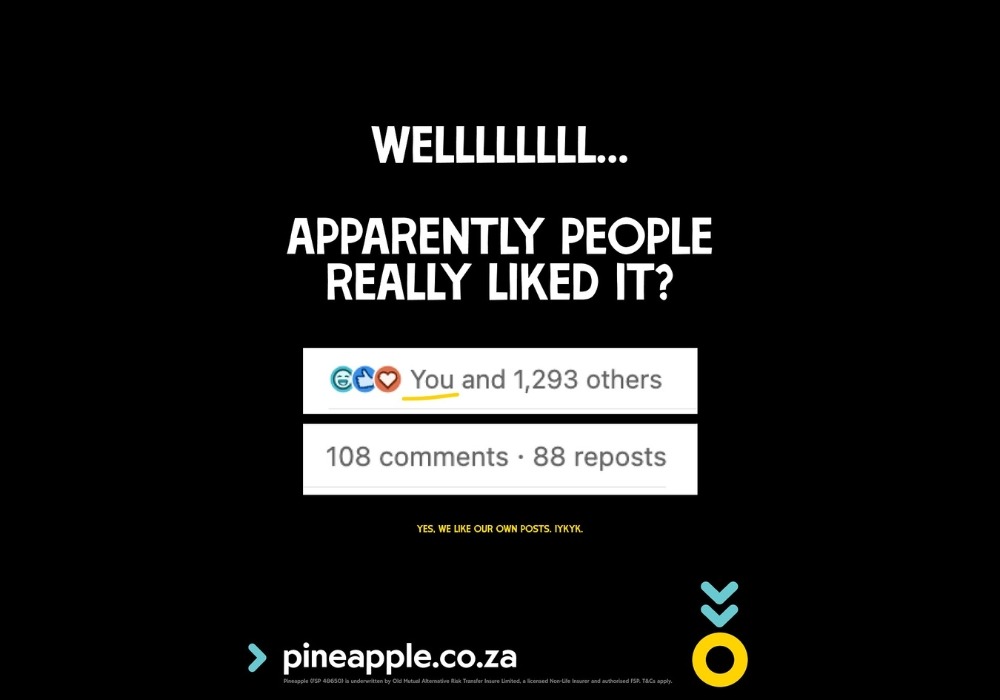
The “Fruit salad” carousel earned over 1,000 reactions, 100+ comments and 80+ reposts- exceptional traction for an insurance brand.
Behaviour
Brands and individuals joined the thread, tagging others, remixing the idea, and fuelling organic reach.
Commercial
While not a direct sales driver, it reinforced Pineapple’s brand equity: modern, quick-witted and culturally fluent - traits that drive long-term trust and affinity in a low-interest category like insurance.
What to do next
- Find the shared joke your audience already gets - then say it better than anyone else.
- Build your banter into your brand system, not as a one-off stunt.
- When your brand gets name-dropped in culture, play along. The smartest move isn’t to control the narrative - it’s to contribute to it.
In short:
Pineapple didn’t make an ad. They made a moment. And that moment squeezed every drop of juice from the internet - right down to the last bottle